Japandi 係乜?日式侘寂 × 北歐自然嘅 2026 大熱風格
Japandi 由 Japanese + Scandinavian 兩個字合成,係 2026 年香港室內設計圈最熱嘅風格之一。Home Journal、Designpedia 等本地家居媒體都將佢列為本年度首選設計方向。佢將日式「侘寂」嘅留白克制,同北歐「Hygge」嘅溫暖實用結合,特別適合 300-600 呎嘅香港細單位——既冇現代簡約嗰種冷感,又比純北歐風更耐睇。對於想要平靜歸屬感嘅 90 後業主嚟講,Japandi 嘅低彩度、自然紋理同弱存在感家具,就係佢最大嘅吸引力。
Japandi 配色公式:奶油白 + 淺木 + 灰調炭點綴
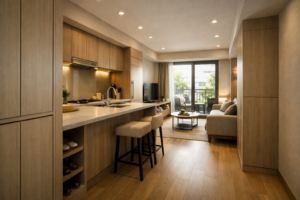
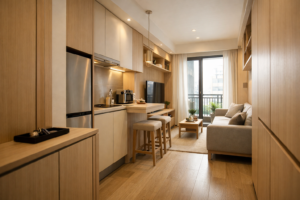
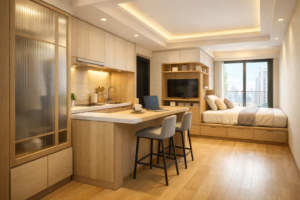
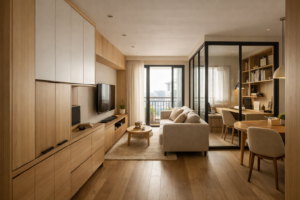
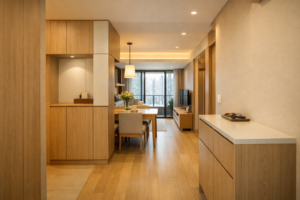
正宗 Japandi 配色講究三層次:主調用奶油白或亞麻米(Dulux 22YY 83/132 或 Benjamin Moore Swiss Coffee)覆蓋約 60% 牆面;副調用日本楓木、白橡或栓木皮(HKD 280-650/呎)鋪 25% 地板同訂造傢俬;最後用炭灰、墨綠、陶土色(HKD 800-1,500/張地毯)做 15% 點綴。值得留意嘅係,Japandi 避用純白同高彩度藍綠——後者係 Scandi 風冇 Japandi 嘅特徵。如果想睇實際配色效果,可以參考沙田愉田苑 3 室嘅木皮主臥設計,雖然主風格屬現代簡約,但其木質溫度同低彩度層次同 Japandi 思路一致。
小單位 Japandi 5 大設計手法
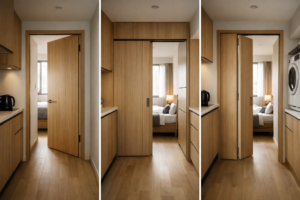
香港納米樓同細單位係 Japandi 嘅最佳載體。AC 設計師團隊喺多個項目實戰中歸納出以下 5 個重點:第一,降低吊櫃存在感,改用通頂簡約收納牆,避免視覺切割;第二,矮身梳化(45-50cm 座高,約 HKD 8,000-18,000)+ 圓角茶几,營造席地而坐嘅日式感;第三,間接燈帶取代主燈,搭配 2700K 暖白光,還原黃昏時嘅柔和氛圍;第四,趟摺玻璃門代替實牆,釋放動線同光線;第五,大量引入天然紋理——亞麻窗簾、藤編收納籃、陶瓷餐具。想了解更多細單位實戰方案,可參考沙田蔚景園 E 室嘅懸浮電視櫃同 L 型開放廚房設計。
香港 Japandi 裝修預算實戰(500 呎為例)
以一個 500 呎兩房單位實打 Japandi 風為例,預算大致如下:基本工程(拆改、水電、油漆、防水)約 HKD 12-15 萬;Japandi 核心嘅木皮訂造傢俬(玄關櫃、電視牆、床頭板、衣櫃、開放廚櫃)約 HKD 15-22 萬;原木風建材選用佔成本比重最大,日本楓木、白橡比一般 melamine 板貴 40-60%。地板可選 SPC 木紋(HKD 28-45/呎)或實木地板(HKD 80-180/呎),廚衛瓷磚揀啞光米黃或溫潤陶土系(HKD 35-90/呎)。燈飾預算約 HKD 1.5-3 萬,軟裝飾品 HKD 2-4 萬。合計入手 Japandi 全屋,大約 HKD 35-50 萬有交易,豐儉由人。
揀公司同採購:避開「假 Japandi」陷阱
市面上不少自稱「Japandi」嘅設計方案,實際上只係加幾件木傢俬嘅普通簡約風。真 Japandi 講究嘅係材質誠實同空間留白,而唔係堆砌元素。揀設計公司時,建議業主先睇返佢哋過往嘅真實完工案例,留意有冇處理過細單位嘅木質溫度同光感層次。詳細評分維度可參考香港裝修公司 8 大評分準則,亦可閱讀香港室內設計公司點揀完整指南了解揀公司流程。AC Design 過往為多個 90 後業主交付 Japandi 風格項目,如想參觀完整住宅案例集或了解全屋設計服務內容,歡迎預約免費度尺諮詢。
有興趣將屋企打造成 Japandi 風格?致電 5222 1129 或 WhatsApp 查詢,AC 設計師同你度尺出方案。
English Summary
Japandi — a fusion of Japanese wabi-sabi minimalism and Scandinavian Hygge warmth — has emerged as one of the most influential interior design styles in Hong Kong for 2026, championed by Home Journal and Designpedia. The aesthetic is particularly suited to compact 300-600 sqft local apartments because it avoids both the coldness of pure modern minimalism and the over-bright cheerfulness of full Scandinavian styling, instead delivering a calm, grounded atmosphere that appeals strongly to younger Hong Kong homeowners.
The signature palette is built in three layers: 60% cream or linen-beige walls (e.g. Dulux 22YY 83/132, Benjamin Moore Swiss Coffee), 25% pale wood — Japanese maple, white oak or red oak veneer at HKD 280-650/sqft — and 15% accent tones in charcoal, deep moss, or terracotta. Authentic Japandi notably avoids both clinical pure white and Scandi’s pastel blue-green palette.
For Hong Kong’s typical small units, AC Design recommends five proven techniques: ceiling-height minimal storage walls without overhead cabinets, low-profile sofas at 45-50cm seat height, indirect 2700K lighting instead of central pendants, glass folding doors replacing solid partitions, and abundant natural textures like linen, rattan and ceramics. A typical 500 sqft Japandi conversion costs HKD 350,000-500,000 total: HKD 120-150K for base construction, HKD 150-220K for custom wood veneer joinery, plus lighting (HKD 15-30K) and soft furnishings (HKD 20-40K).
When selecting a contractor, beware of “fake Japandi” — designs that merely add wooden items without honoring the philosophy of honest materials and restrained space. Review portfolios for genuine wood-tone layering and light handling competence before signing. Call 5222 1129 or WhatsApp for a complimentary on-site consultation.